
Be Prepared for Emergencies
As an Amazon Associate I earn from qualifying purchases. For more details, please see our disclosure policy.

Want to save this post?
Enter your email below and get it sent straight to your inbox. Plus, I'll send you time- and money-saving tips every week!
photo source
Want to save this post?
Enter your email below and get it sent straight to your inbox. Plus, I'll send you time- and money-saving tips every week!
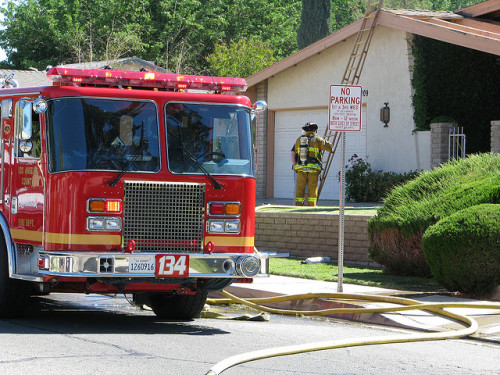
You’ve no doubt seen the devastation that has rippled its way through Japan. In other parts of the world, earthquakes, hurricanes, tornadoes, and flooding have wreaked havoc on the inhabitants there. Natural disasters are an unfortunate part of life.
And springtime brings that to mind. I remember when we lived in Kansas the first Wednesday of March saw the beginning of the sirens. To this California girl it was always a shocker. We don’t do sirens here except for emergency vehicles.
But the first Wednesday of every month was the day when our Kansas city tested the tornado sirens, thus inaugurating Tornado Season. I knew what to do for earthquakes and flooding, but tornadoes were a whole new ball game. And our family learned about emergency preparedness in a whole new way.
Certainly, we can’t prevent natural disasters from happening, but we can do some things to be prepared and to lessen their effects on our homes and personal lives. And it goes without saying, that emergency preparedness is vital in order to protect your life and that of those you love.
Here are some things that you can do to be prepared for emergencies:
1. Know what the risks in your community are.
When readers started asking me how we were doing here in San Diego as a result of the recent tsunami, I had to do a double take. It had not impacted my life at all. But, I did some homework anyway. What I found was really helpful.
San Diego County offers an exceptional website, called Ready San Diego, which explains the possible natural disasters and other emergencies that one can be prepared for in this particular vicinity. I had never considered us at risk of tsunami, but I feel better prepared to know the signs of one and to think through an emergency plan. Going to the beach this summer will hopefully be uneventful, but I feel more confident knowing what I would do if there were one on the California coast.
Check with your local government agency to see what emergencies are possible in your area. Not sure where to start in your research? Check the US site for emergency preparedness, Ready.gov.
 photo source

2. Prepare your kids without freaking them out.
We want our kids to be prepared for emergencies. But we also want to do so without freaking them out. Seek out resources that are designed for kids to teach them signs of a natural disaster and what to do.
World Vision has put together these tips for talking to your children about natural disasters.
Growing up, we regularly had fire and earthquake drills at our school. The theory of drills is that in a true emergency, the mode of operation is cemented in your head since you’ve walked through it so many times. Panic can trouble our reasoning skills. But, drills help our reactions become second nature. Why not have some drills at home?
Check out ReadyKids for kid-friendly explanations and encouragement to plan and be prepared for any emergency. Chances are that once your kids walk through the steps on the site, they’ll be able to teach you how to be ready.
 source
 source
3. Create an emergency and evacuation plan.
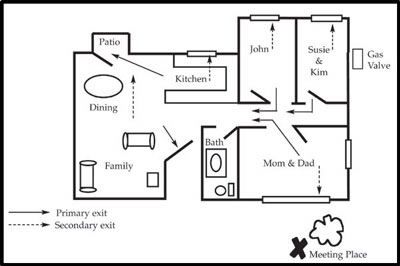
One thing my kids and I have loosely talked about is creating a home evacuation plan. We’ve yet to put anything in stone, but this explanation from Preparedness Pantry has me thinking I should stop putting it off. You can print a grid from the US Fire Administration to write up your plan.
Schools and places of businesses generally have a plan in place for emergencies. FishPapa is a “first responder” at his work. I know that if there were an emergency at his workplace, he knows what to do and is responsible for helping others.
Our homes are even more important — but often easy to overlook.
4. Stock up on emergency supplies.
Many of us “mean to” get an emergency stockpile going. We say that we will — someday. But, you know that “someday” will happen before we get around to it. It always does.
This family supply list is not that difficult to pull together. And if you have a pantry stockpile already, now would be a good time to divert some of those items to an emergency box. Just be sure to check expiration dates before you stash it all away for the next year or so.


Water. I need to figure out a better way to have some on hand just in case!
I like them on Facebook.
I need to stock up on water and canned foods and talk to my kids.
I need to think through what special things for my infant and toddler that I need to have in case of emergency – not just food/clothing but other things that would be of help and comfort to them should an emergency strike.
The one thing I still need to do is organize it all!! I want to take some road things out of our emergency rubbermade bins to out in our new minivan. The stow and go seats provide a huge in floor storage spot. I have some water and non-perishable food bars and hand warmers, but I want to add first aid, those silver heat reflecting “blankets”, hats, and whatnot in case we are ever in the car already when the emergency strikes.
I need to plan an emergency escape route from the house in case of fire and teach it to my kids.
I want to purchase water to keep on hand in the event that our supply is tainted
I want to create an evacuation plan for my family in case of an emergency. We live near a nuclear power plant.
I buy from this web site so I am familuar with a lot of their products. I have never tried the ice cream sandwiches…I have been storing extra food for a few years and try to rotate. I do need to stock up on water as that is something I have not been buying much of.
I “like” this site on facebook…
I need to update our emergency bag. I looked in it recently and it had preschool coloring books, diapers, and busted snacks. My kids are 9 and 11!