
Setting SMART Financial Goals
As an Amazon Associate I earn from qualifying purchases. For more details, please see our disclosure policy.
Having money goals can be great motivation for earning and saving money as well as give direction in how you spend your money. But how do you set SMART financial goals?

Want to save this post?
Enter your email below and get it sent straight to your inbox. Plus, I’ll send you time- and money-saving tips every week!
Money can be a huge stressor for a lot of people, particularly for couples and families. It’s hard to live within your means and meet everyone’s needs.
When Bryan and I were dating, we were mindful of our money, but that mindfulness took a more serious turn once we got married and leveled up the more kids we had. When you are responsible for more than just yourself, there’s a lot more risk.
Managing money well may seem to come easy to some people and be harder for others. I think some of us are just more intuitive about earning, spending, and saving money.
Everyone can learn to manage their money well and acquire wealth. Part of that process happens in setting financial goals. These are key to debt-free living.
Why Set Financial Goals
Setting financial goals takes your fiscal life beyond just getting by. It’s the next level in the Game of Life, one where you can think bigger than paycheck-to-paycheck.
Sometimes you get knocked down, like when debt accumulates or you’re out of work, but getting back to setting financial goals can add purpose and motivation to your daily grind.
Setting SMART financial goals can make your future plans more effective.
Setting SMART Financial Goals
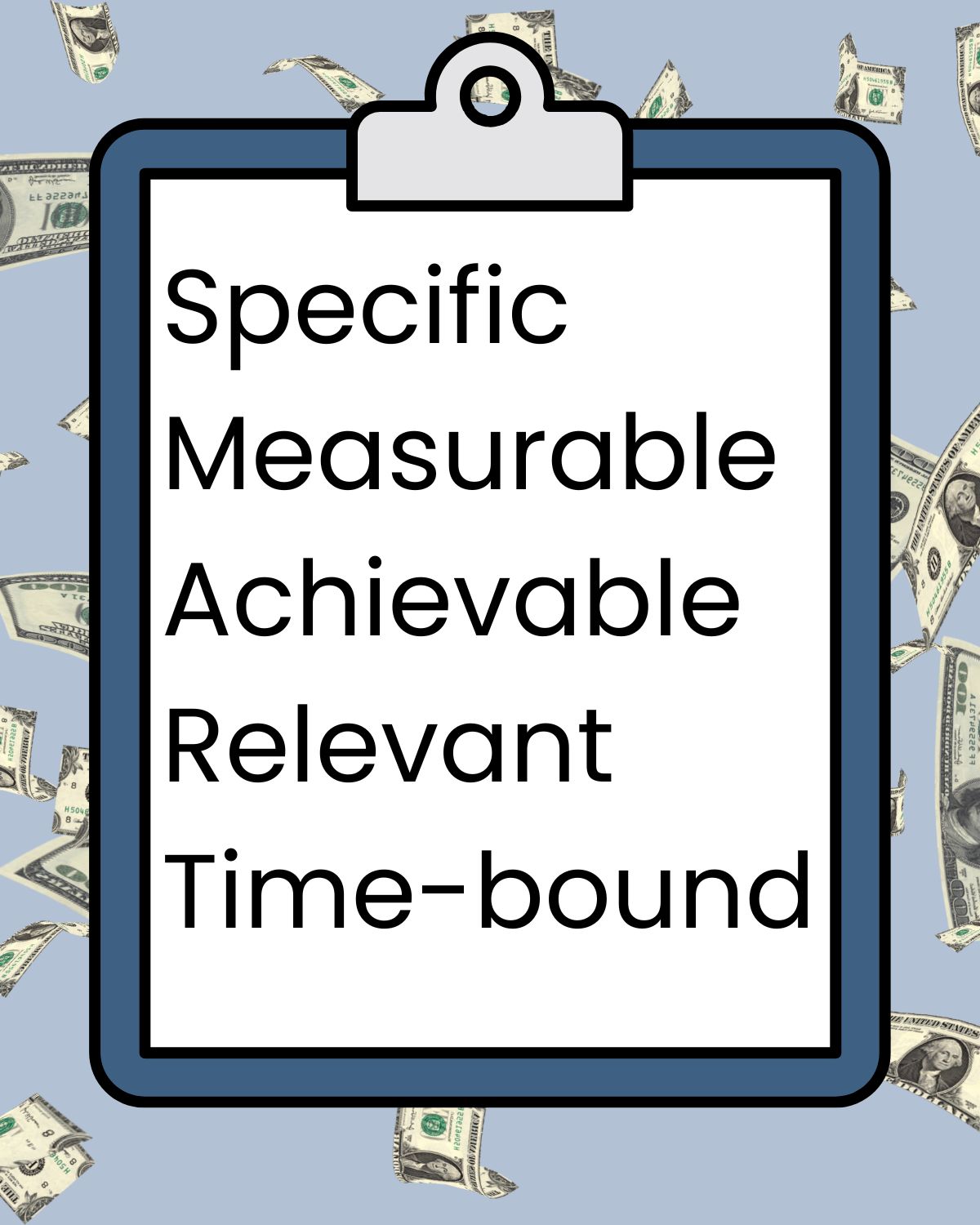
What are SMART goals? Likely, you’ve heard the term before; it’s an acronym for more effective goal setting. Each letter stands for a criteria of a good goal.
- S = Specific
- M = Measurable
- A = Achievable
- R = Relevant
- T = Time-Bound
Let’s dig into what this looks like in real life with a real family with real problems. aka The FishFam, circa 2012.

Make your goal specific.
You’ve heard that it’s good to “save money,” but there’s a problem with that.
Blindly saving money is not as effective as giving your goal a name. To “save money” is not as motivating as to put a dollar amount toward a certain project or to specify a certain financial goal.
When you make your goal specific, you can identify with it more and be more motivated.
For instance, in 2007 when we started paying off our mountain of debt, we had three immediate goals that were very specific, based on Dave Ramsey’s Baby Steps, what all the cool kids were doing back then.
- Establish a $1000 emergency fund.
- Pay off all debts. We wrote them all down in a red spiral notebook and kept track that way since I hate spreadsheets.
- Fully fund a 3 to 6 month emergency fund based on our minimum viable expenses.
As you can tell, these were very specific goals. Knowing exactly what our plan was for our money took out the decision fatigue and gave us a very clear purpose.
Make it a goal you can measure.
In football there’s a goal line. Soccer, hockey, and basketball have nets. A running race has a finish line.
You can’t assess what you can’t measure. Otherwise, how would you know you achieved it?
You have to be able to measure your goal. “Saving money” isn’t a measurable goal. Saving a certain amount of money is.
In our example above, we knew exactly what each benchmark was.

Set an achievable goal.
Another key aspect of a good goal is that it’s achievable. Is the thing you want realistic?
Say you want to save a million dollars. Depending on your income, your spending, and your savings rate, that might seem like a pipe dream.
While it may be achievable someday…. the timeline may be too far off to be motivating. You’ve heard how to eat an elephant, right?
Cut that goal down into a bite size chunk. Set an achievable goal.
When we first started our budget journey, realizing we had no money and a whole lot of debt, it was easy to make financial goals. We just wanted to be out of the hole!
Honestly, that was all I could think about. And it was odd to think that it would ever happen.
After eighteen months of scrimping and saving, we paid off our last credit card, American Distress. We breathed a sigh of relief. At about the same time, we sold our home in Kansas and actually broke even on that transaction; a minor miracle in early 2009. We socked the equity (the initial downpayment) into an emergency fund and found we’d achieved those initial goals.
It was only then that we started to dream of bigger things, like college and retirement.
Make sure your goal is relevant to your life.
This is the part when you have to get honest with yourself. Do you want that financial goal or is it one that someone else wants for you?
In other words, what’s your why? Why is this your goal?
For us to get on the Budget Train, we had to be sure that the destination was worth the cost of the trip. It absolutely was. Getting out of debt was the best thing Bryan and I could have done for ourselves, our marriage, and our kids.
Set a deadline on hitting your goal.
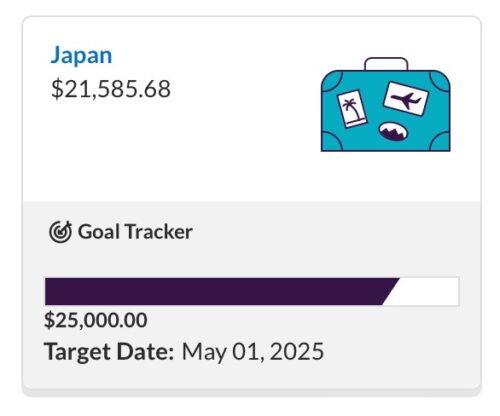
Many things in life are a marathon, not a sprint. But no marathon goes on forever. You’d run out of steam!
If your financial goals aren’t time-bound in some way, you’ll be one of two things: exhausted or under-motivated.
Set a deadline for your financial goals so that you’ve got enough steam to keep going, but not so much time that you get lazy.
Getting out of debt seemed like such a monumental victory that once we did that, we just sat down and rested. For a long while. We saved our money where we could but we just tossed it into a nebulous account that didn’t really have a name.
It wasn’t very motivating.
Why Setting SMART Goals Matters
It wasn’t that we didn’t want to continue, it’s just that we weren’t really sure what to do next. We knew retirement, college, and long-term housing was important, but we were conflicted.
We also did some things that other families might not have chosen, like take the kids to France for a month paid in cash. And then England. And then Hawaii.
With each trip on the horizon, we set a smart financial goal and started socking the money away in a special bank account. We’ve set up Sinking Funds for cars, college, and weddings as well.
Just “saving money” doesn’t do it for me. Giving it a name, making it measurable, achievable, and relevant as well as time-bound, that helps me get serious about our financial goals.

More Good Ideas About Money




What do you think?
I’d be honored if you chimed in the comments section. What do you think?
This post was originally published on January 5, 2012. It has been updated for content and clarity.





We have finished baby step #3! Now we are focusing on saving up enough for a down payment on a bigger home. Right now this seems like an extremely daunting task, I mean, I’ve never thought about saving up 50K before! This should take us about 4 years. I hope we can stay on track that long! 🙂
That is a wonderful goal! Go!
My darling husband and I need to make a date to do just this…goal setting, and taking a serious look at our finances. We went through Financial Peace University several years ago, and enjoyed getting a good handle on our financial situation. The train has derailed, and we need to get it back on track. Thanks for the encouragement! 🙂
It’s easy for that to happen. Don’t be discouraged.
But, go plan a $ meeting. 🙂
We are terrible about setting financial goals. I think part of this is because we don’t have anything super pressing like credit card debt or buying a house. Right now we want to replace the windows of our house and we need to change the way we budget so I can make some changes in my career.
We haven’t established college funds for our kids and don’t plan to. We’re on track to have our house paid off when the oldest is 18 y/o and my parents have set up education funds for both our children. We agree with your theory that if you want something bad enough it will happen.
In terms of paying off the house this is where I feel like we’re missing something. We already pay an extra 50% on our mortgage every month which has us on track for an early pay off. But that’s still only paying it off in 20 years rather than 30. Yesterday I did the math and if we were to live super super bare bones while continuing to save responsibly and fund retirement we could double that payment. But that still only gets the house paid off in 7 years. I commend people who do that but we decided we don’t want to live that way for that long. We didn’t buy too much house for our income and I don’t feel like we live extravagently. If we were trying to dig ourselves out of consumer debt I’d be all for sacrificing to pay it off (as I’ve been there and done that when I was single and it sucked) but we’ve decided that’s not what we want to do for the house. I guess we’re wimps. 🙂
Now, if our income suddenly increased you better believe we’d be throwing more on the house. No interest in upsizing here!
There are so many ways to slice and dice that housing thing. We haven’t bought in California since our move back. Some people think that’s silly. But, considering all the parameters, it doesn’t look like the best thing for us.
You gotta go with how the numbers crunch for you.
We’ve been in the house for six years and honestly we would have been financially better off renting. Considering property taxes, the little equity we have in the house due to the market tanking, plus all the money we’ve put into things like a new garage roof, parking slab, new furnace and air conditioning, etc. the short term pay off isn’t there. I don’t regret the decison because I love the house and neighborhood but I totally get why you wouldn’t buy right now.
We still keep an eye on the market. We might be singing a different tune if it ever hits the bottom here. It’s still going down in San Diego county. But, if we found THE perfect house, we would def consider. Sounds like you found one. 😉
We have fallen into the same trap! We paid off all of our debt about 8 months ago and paid cash for braces in June. It was great! But since that time we haven’t done much financially.
We have bought some things that we needed but were on hold, we have beefed up some of our savings funds and saved some for the next set of braces. We have put a good bit of money into car repairs. But we have NOT tackled the next savings goal.
We have not added anything to our Emergency Fund in years – it is time to start contributing each and every month. We also have another set of braces to pay for (2 of 4!) so we need to focus on that. Numerous house repairs are also needed.
I sometimes feel like we have too many goals and not enough money to go around. BUT we have to start somewhere. It is time to get motivated again! Thanks for the encouragement.
After scrimping and saving to pay down debt, it’s hard to not want to enjoy it for awhile. But, “gazelle intensity” does pay off.
We’re almost in a similar boat. We did the steps a little out of order as well – the house will be paid off by the end of Feb and then I have 1 student loan left. The interest rate was higher on the house so we chose to focus on that first. The student load should be paid off either by early summer if everything goes as planned or the end of the year.
We both currently put money in a 401K/403B plans, but I think my next goal is to start contributing to Roth IRA’s and max those out. We’re both 34 and 38 so I want to make sure the retirement savings is there.
We have 2 little girls (almost 5 and 2) so we also need to start putting away for college – which I’m not quite sure how I want to do that. I’m not a big fan of the 529 plans since you have to use that for education. That will be the other thing I need to figure out this year.
Changing our goals up a bit this year. Last year we were focused on paying off the house, but then towards the end of the year, we put that to a screeching halt as we started thinking about the housing market.
If my husband were to lose his job (please Lord no), then push come to shove, we could always walk away from a house (as a last resort). But what we don’t want to happen is to get to our elderly years and not have a leg to stand on – I don’t think we can fully depend on social security based on the way things are going. I am 39, my husband is 36 and I feel like our 40’s is going to be a critical time to start loading up the 401K and Roths and such. We currently only give 3% of our income to 401K, but we’re gonna increase that to 6% with his next increase (if they give them this year – jury is still out). Our 6month emergency fund should be complete by this April hopefully, and then maybe we can consider contributing to other retirement venues. I HATE that we have stopped paying extra on our house because I don’t like debt. But I’m thinking in a few years (2-3) I’d like to downsize and so maybe we’ll gain momentum then. For now, it’s all about retirement.
Love your blog. :o) Have been a subscriber via RSS for a while now.
You have done your homework! Good job!
My husband and I are huge goal setters when it comes to finances. He is an accountant and always has spreadsheets and graphs going that I never fully understand and I am clueless about any type of math, so the only way for us to stay on the same page is to focus on goals. That way we both have something to work for and can comprehend our financial position in our own ways. Goals are very important to us. Great article!
Goal setting was my frugal tip #2. It is so important to have a mark to aim at.
Having a goal is important. We realized that if we ever wanted to open a brewery, we had to get our bills paid down. So we’ve been working towards that and it’s amazing how much a little motivation helps!
Today I’m linking up 10 winter salad recipes – most use ingredients that are very inexpensive this time of year.
Sounds like you’re on your way. A goal always helps move you in the right direction!
You are just such an inspiration in so many ways. I have definitely set (and reached) financial goals in the past — and brought my husband right along with me a couple of times too. 🙂 My first grown-up, big one, was paying off my student loan debt. I had the amount I wanted paid off done before I even took my first “real” job — I worked extra shifts in a restaurant concurrently while looking for other work and got it done! The next big one was paying down our debt (most of it my husband’s) and getting to the point where we no longer use credit cards. Now that we own a home and are relatively settled, we will have to discuss our next concrete goals, because we talk about a lot of things but aren’t working on anything specific at the moment (hard to set real goals when employment has changed a few times, we’ve moved several times AND purchased a home, and added two to our family, tee hee). But we’ll get there!
Baby steps, baby steps. Sounds like you’re getting there, though. Thanks for your kind words!